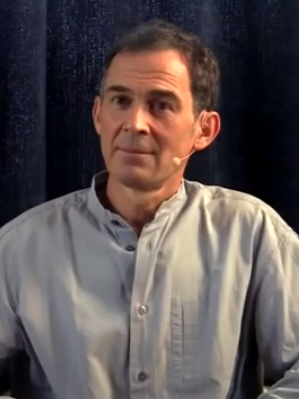
The Journey of Rupert Spira
Rupert Spira, born in 1960 in London, has emerged as one of the most articulate and profound teachers of non-duality in the contemporary spiritual landscape. Spira’s journey began not in philosophy or spirituality, but in art. As a young man, he studied pottery with Henry Hammond and later with Michael Cardew, becoming a renowned ceramic artist before fully embracing his role as a spiritual teacher.
From Art to Spirituality
Spira’s transition from artist to spiritual teacher was gradual. His interest in the nature of experience led him to explore various spiritual traditions, including the teachings of Krishnamurti and Ramana Maharshi. However, it was his encounter with Francis Lucille, a teacher in the tradition of Advaita Vedanta, that profoundly shaped his understanding and set him on the path to becoming a teacher himself.
“Being Aware of Being Aware”: An Introduction
Published in 2017, “Being Aware of Being Aware” is part of Spira’s “Essence of Meditation” series. The book offers a direct exploration of the nature of awareness itself, inviting readers to recognize the ever-present consciousness that is the fundamental reality of all experience.
The Book’s Structure
“Being Aware of Being Aware” is divided into short, contemplative chapters, each exploring different aspects of awareness and consciousness. Spira’s writing style is clear and precise, often employing thought experiments and guided meditations to help readers directly experience the truths he’s pointing to.
The Central Premise: Awareness as Fundamental Reality
At the heart of Spira’s teaching, and central to “Being Aware of Being Aware,” is the idea that awareness or consciousness is not something we have, but what we are. It is not a product of the brain or body, but the fundamental reality in which all experiences, including the experience of the body and mind, appear.
The Illusion of Separation
Spira argues that our usual sense of being a separate self, located in the body and separate from the world, is an illusion. This illusion of separation is the root of all psychological suffering. The recognition of our true nature as awareness itself is, according to Spira, the key to lasting peace and happiness.
Key Concepts in “Being Aware of Being Aware”
The book introduces several key concepts that form the foundation of Spira’s non-dual teaching.
Awareness and Its Content
Spira makes a crucial distinction between awareness itself and the content of awareness – thoughts, feelings, sensations, and perceptions. While the content of awareness is ever-changing, awareness itself remains constant and unchanging.
The Nature of Experience
Spira invites readers to closely examine the nature of their experience. He points out that all we ever know are our own thoughts, feelings, sensations, and perceptions – all of which appear in and are known by awareness.
Practical Explorations in “Being Aware of Being Aware”
Unlike many philosophical texts, “Being Aware of Being Aware” is deeply practical. Spira provides numerous exercises and contemplations designed to help readers directly recognize the nature of awareness.
The Meditation of No Meditation
One of the key practices Spira introduces is what he calls “the meditation of no meditation.” This involves simply resting as awareness itself, without trying to focus on any particular object of awareness. This practice helps to reveal the ever-present nature of awareness that is often overlooked in our habitual focus on objects of experience.
The Implications of Non-Duality
Spira’s teachings, as presented in “Being Aware of Being Aware,” have profound implications for our understanding of reality, self, and the nature of experience.
Transcending the Subject-Object Divide
In recognizing awareness as the fundamental reality, Spira suggests we can transcend the usual subject-object divide. There is no separate self experiencing an independent world, but rather one seamless reality of awareness appearing as all experience.
Challenges and Misconceptions
While many find Spira’s teachings liberating, they can also be challenging to grasp, particularly for those steeped in materialist worldviews.
The Challenge of Direct Experience
One of the main challenges readers face is the shift from conceptual understanding to direct experience. Spira consistently emphasizes that his pointing are not meant to be believed, but directly experienced, which can be a significant shift for many.
The Impact of “Being Aware of Being Aware”
Since its publication, “Being Aware of Being Aware” has had a significant impact in spiritual and non-dual circles. Its clear and direct approach to exploring consciousness has made it a valuable resource for those interested in meditation and self-inquiry.
Growing Recognition
While perhaps not as widely known as some other spiritual teachers, Spira’s influence has been growing steadily. His books, including “Being Aware of Being Aware,” have been praised for their clarity and depth by other teachers in the field, including Eckhart Tolle and Adyashanti.
Beyond “Being Aware of Being Aware”
While “Being Aware of Being Aware” is a cornerstone of Spira’s teaching, he has authored several other books that expand on his non-dual philosophy. These include “The Nature of Consciousness” and “The Transparency of Things,” each offering different angles on the exploration of awareness.
Spira’s Ongoing Work
Today, Rupert Spira continues to teach through retreats, online courses, and YouTube videos. His approach combines intellectual rigor with experiential exploration, making the often abstract concepts of non-duality accessible to a wide audience.
Integrating Spira’s Teachings into Daily Life
For many readers, the challenge lies in integrating Spira’s profound insights into daily life. While the recognition of our true nature as awareness can be transformative, old habits of thinking and feeling often reassert themselves.
Living from Awareness
Spira encourages a gradual process of allowing this recognition to permeate all aspects of life. This doesn’t mean denying or suppressing the appearance of a separate self, but rather recognizing it as an appearance in awareness, not our fundamental reality.
Conclusion: The Ongoing Exploration of Consciousness
“Being Aware of Being Aware” offers a profound and direct exploration of the nature of consciousness. In a world where we often seek happiness and peace in external circumstances, Spira’s work invites us to recognize the ever-present peace of our own being.
A Timeless Message in Modern Form
While the non-dual message at the heart of “Being Aware of Being Aware” is ancient, Spira presents it in a form that resonates with contemporary seekers. As interest in meditation and consciousness continues to grow in the West, Spira’s clear and direct pointing to the nature of awareness offers a valuable contribution to our understanding of ourselves and the nature of reality.
Leave a Reply